


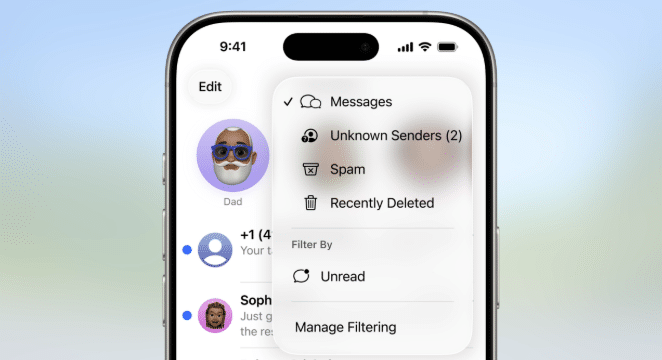
Apple’s iOS 26, expected to roll out in mid‑September 2025, introduces a new “Unknown Senders” filter in the Messages app. It automatically diverts SMS messages from numbers not in a user’s contacts into a separate folder—with no notifications, badges, or alerts. This change doesn’t require users to enable it explicitly if they’ve already used Apple’s filtering previously, and it’s likely to affect many political campaigns’ outreach efforts.
For more on L2’s targeted voter cell phone database email: paul.westcott@L2-data.com
What Campaigns Need to Know
Message Routing Is Based Only on Contact Status
Apple is filtering based on sender familiarity, not message content or sender type. Even messages from registered and compliant campaign senders still get classified as “Unknown” unless the recipient has previously interacted or added the number to contacts.
Notification Behavior
Messages routed to the “Unknown Senders” tab are silent by default. Users won’t see badges or alerts unless they customize their settings manually. There is no way for senders to classify themselves as political or safe beyond encouraging engagement through follow‑up tactics.
How Better Voter Data & Targeting from L2 Can Help
While iOS 26 will reduce cold outreach visibility, campaigns can offset the impact by focusing on quality over quantity, and that’s where L2’s voter contact data makes a measurable difference.
- Higher Match Rates for Mobile Numbers
L2 maintains one of the most accurate and frequently updated sets of cell phone numbers tied to voter records, which improves delivery rates and reduces wasted sends. - Modeled Engagement & Responsiveness
By leveraging L2’s consumer and behavioral data, campaigns can identify voters more likely to opt in, respond, or add campaign numbers to their contacts, helping bypass Apple’s “Unknown” filter. - Segmentation for Message Relevance
Instead of mass-blasting lists, campaigns can target voters based on demographics, voting history, issue interest, or past donation behavior, making messages more relevant and prompting higher reply rates. - Integrated Multichannel Approach
L2 data supports coordinated outreach across email, direct mail, and digital ads, priming voters to expect your text, boosting the chance they’ll recognize your number and whitelist it. - Real-Time Data Hygiene
With updated NCOA, deceased, and phone verification processes, L2 reduces bad numbers and spam complaints, which can otherwise lower deliverability and trust.
Bottom line: Better targeting means fewer “unknown” messages, higher open rates, and more engaged supporters—even in a post‑iOS 26 world.
Best Practices for Campaigns to Adapt
- Drive Opt‑In Communication
Encourage supporters to reply once or add sender numbers to their contacts to bypass filtering. - Educate Constituents
Provide guides that explain how to whitelist campaign numbers under Settings → Messages → Unknown Senders. - Diversify Communication Channels
Expand beyond SMS: email, push notifications, apps, personalized peer-to-peer outreach. - Re-evaluate ROI
With SMS effectiveness potentially halved on iPhones, reassess campaign budgets and attribution models. - Leverage Better Data
Use highly accurate, targeted contact lists from sources like L2 to maximize engagement within a smaller, higher-quality audience.
Conclusion
iOS 26 isn’t just a UX upgrade—it’s a disruption to fundraising and voter outreach infrastructure. While Apple isn’t blocking political texts outright, the invisible-inbox design significantly reduces visibility and thus engagement.Campaigns need to pivot quickly: educate supporters, rethink tactics, and leverage high-quality voter data from partners like L2 to keep messages visible and impactful. If Apple’s updates go live as planned in mid‑September 2025, those who adapt fastest will preserve both revenue and voter contact efficacy.
For more on L2’s targeted voter cell phone database email: paul.westcott@L2-data.com